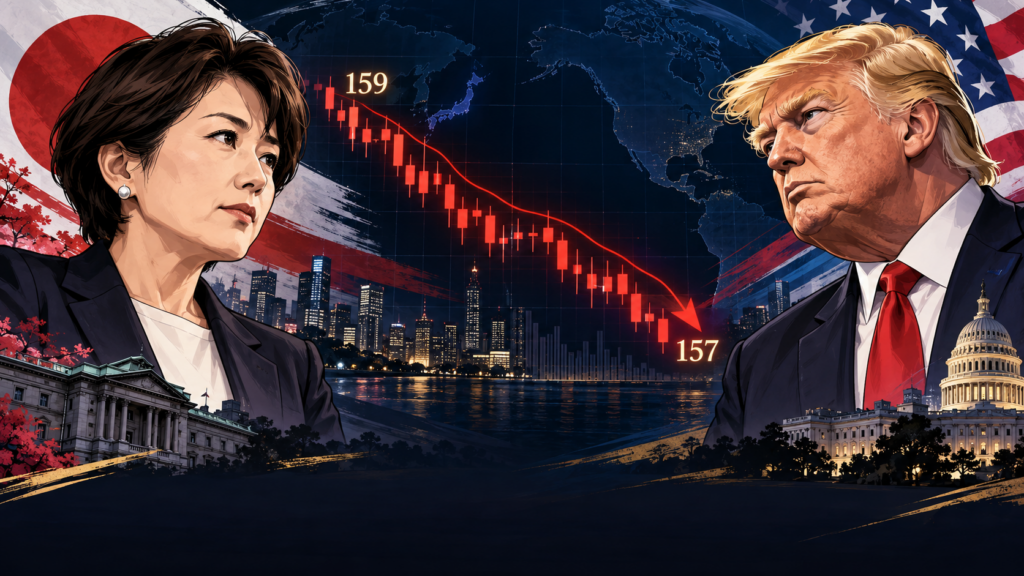
USD/JPY fell from the upper 158-yen range to the 157-yen range during Tokyo trading on September 25. Comments about yen weakness by Japanese and US officials were the main catalyst. Falling US Treasury yields and oil prices also weighed on the dollar.
What happened in Tokyo trading?
USD/JPY briefly reached ¥158.92 early in the session, then slipped below ¥158 and touched ¥157.94. The intraday move was roughly one yen.
Why did the yen strengthen?
Finance Minister Satsuki Katayama said President Donald Trump had expressed concern about yen weakness at a previous US–Japan leaders’ meeting. She also said Prime Minister Sanae Takaichi had conveyed that an undervalued yen was a problem. Traders interpreted the remarks as a sign that both governments were watching the exchange rate, prompting some investors to reduce short-yen positions. This does not establish that a new currency intervention occurred.
US yields and oil
US long-term yields and oil prices also eased after supporting dollar buying the previous day. Lower yields can reduce the relative appeal of holding dollars. These market factors reinforced the yen’s advance, although their individual contribution cannot be measured precisely.
Keep the timeline clear
Katayama and US Treasury Secretary Scott Bessent spoke by phone at 9 p.m. Japan time on September 25 and reaffirmed their concern about an undervalued yen. That call came after the Tokyo-session decline, so it cannot explain the earlier move. It may, however, inform how markets assess official comments in subsequent sessions.
What to watch next
Further statements from Japanese and US officials, US bond yields and oil prices may shape the next move. The September 25 drop alone does not mean that yen strength will continue. This article explains market developments and is not investment advice.

質問・交流コーナー
FXでわからないことがありましたら、お気軽にご質問ください。
記事に関する疑問や、学んだこと・気づいたことをコメントでお寄せください。ほかの方のコメントへの返信も歓迎します。
お名前はニックネームで構いません。口座番号や連絡先などの個人情報は本文に記載せず、お互いを尊重した交流をお願いします。初回のコメントは承認後に表示されます。